Daily Operations
The Daily Operations module streamlines routine tasks and protocols essential for maintaining high standards of wildlife care, ensuring consistency across all team members and shifts.
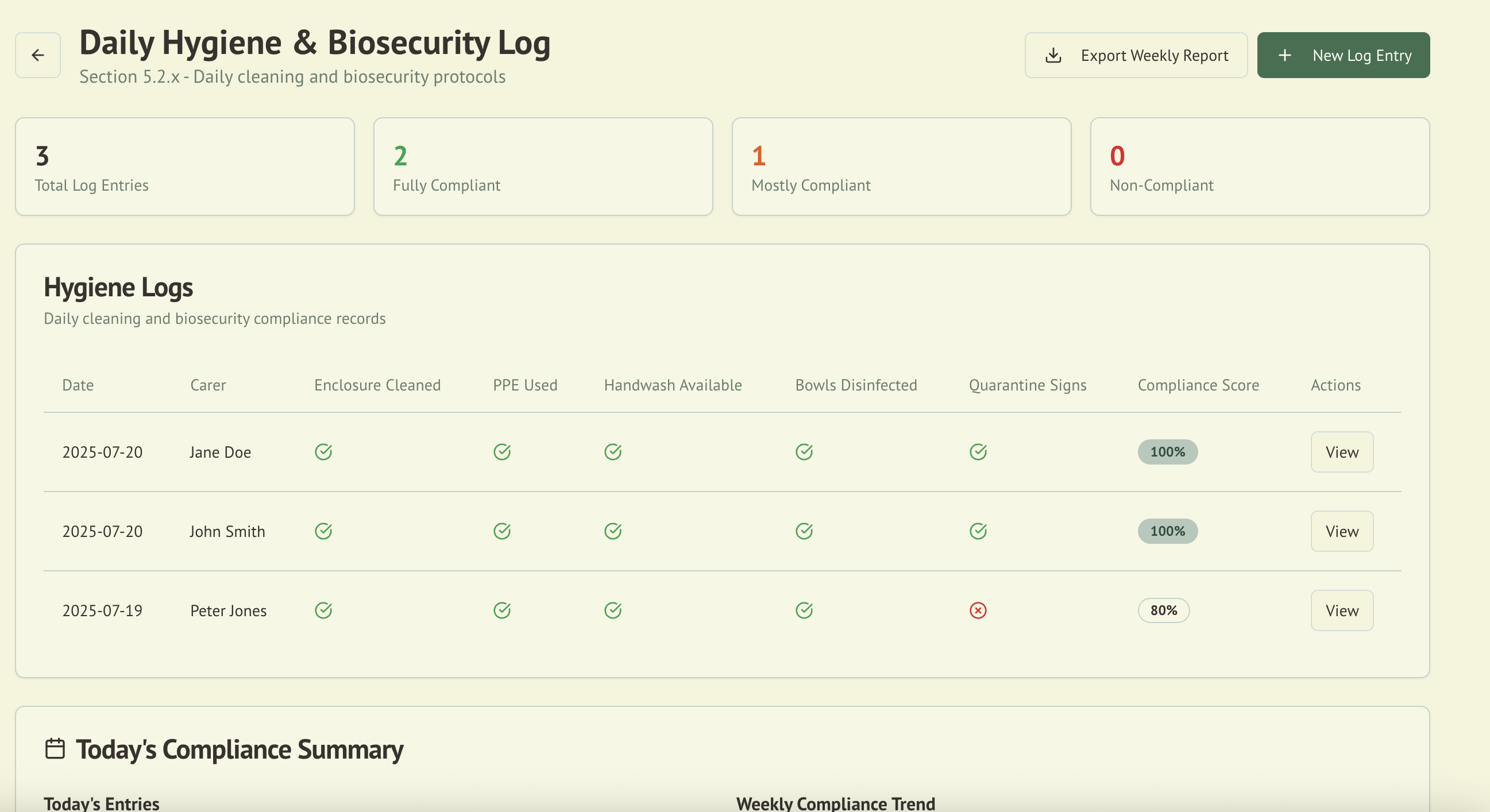
Overview
Daily operations management ensures:
- Consistent care standards across all shifts
- Compliance tracking for routine requirements
- Efficient workflows through standardization
- Quality control via checklists and logs
- Team coordination through shared task management
Daily Task Categories
🧹 Hygiene & Cleaning
Morning Hygiene Protocol
Essential daily cleaning tasks:
| Time | Task | Verification | Compliance |
|---|---|---|---|
| 6:00 AM | Handwashing stations check | ✓ Soap available ✓ Paper towels stocked ✓ Signage visible | ACT 5.2.1 |
| 6:30 AM | PPE inventory | ✓ Gloves adequate ✓ Masks available ✓ Aprons clean | ACT 5.2.2 |
| 7:00 AM | Enclosure cleaning | ✓ Remove waste ✓ Disinfect surfaces ✓ Replace bedding | ACT 5.2.1 |
| 8:00 AM | Equipment sterilization | ✓ Feeding bowls ✓ Medical instruments ✓ Transport carriers | ACT 5.2.3 |
Biosecurity Measures
- Quarantine zones: Signage and barriers maintained
- Foot baths: Disinfectant changed daily
- Isolation protocols: Separate equipment for quarantine
- Cross-contamination: Prevention procedures followed
- Waste management: Proper disposal methods
🍽️ Feeding Routines
Feeding Schedule Management
| Life Stage | Morning | Midday | Afternoon | Evening | Night |
|---|---|---|---|---|---|
| Neonates | 6 AM | 10 AM | 2 PM | 6 PM | 10 PM |
| Juveniles | 7 AM | 12 PM | - | 5 PM | - |
| Adults | 8 AM | - | - | 4 PM | - |
| Special Needs | As prescribed by veterinarian |
Food Preparation
- Check diet charts for each animal
- Prepare formulas according to specifications
- Warm to correct temperature if required
- Portion appropriately based on weight/age
- Document consumption in feeding logs
Feeding Documentation
- Amount offered vs consumed
- Time of feeding
- Animal behavior during feeding
- Any difficulties or refusal
- Weight changes observed
🏥 Health Monitoring
Daily Health Checks
Visual Assessment (All animals):
- ✓ Active and responsive
- ✓ Normal posture
- ✓ Clear eyes and nose
- ✓ Normal breathing
- ✓ Appropriate activity level
Physical Monitoring (As needed):
- Temperature recording
- Weight measurement
- Wound inspection
- Medication administration
- Hydration assessment
Medication Schedules
| Task | Frequency | Documentation | Verification |
|---|---|---|---|
| Oral medications | As prescribed | Drug, dose, time | Double-check dose |
| Topical treatments | Per schedule | Application site | Photo if needed |
| Injections | Vet-supervised | Site, reaction | Witness required |
| Supplements | Daily/weekly | Type, amount | Stock check |
📋 Administrative Tasks
Record Keeping
Daily documentation requirements:
-
Admission Log Updates
- New arrivals processed
- Status changes recorded
- Outcomes documented
-
Care Logs
- Individual animal records
- Treatment notes
- Behavioral observations
-
Inventory Management
- Food stock levels
- Medical supplies
- Cleaning materials
- Equipment status
-
Communication Log
- Shift handover notes
- Veterinary consultations
- Public inquiries
- Team announcements
Shift Management
Morning Shift (6 AM - 2 PM)
Priority Tasks:
- Night shift handover
- Morning health checks
- First feeding round
- Enclosure cleaning
- Medication administration
- New admission processing
Key Responsibilities:
- Primary animal care
- Veterinary appointments
- Public inquiries
- Supply ordering
Afternoon Shift (2 PM - 10 PM)
Priority Tasks:
- Day shift handover
- Afternoon feedings
- Evening medications
- Exercise/enrichment
- Final health checks
- Facility security
Key Responsibilities:
- Evening care routines
- Emergency response
- Volunteer coordination
- Documentation completion
Night Shift (10 PM - 6 AM)
Priority Tasks:
- Evening handover
- Night feedings (neonates)
- Security rounds
- Emergency monitoring
- Early morning prep
- Handover preparation
Key Responsibilities:
- Overnight care
- Emergency response
- Facility monitoring
- Morning setup
Checklists and Protocols
Opening Checklist
- Disarm security system
- Check overnight notes
- Inspect all animals
- Check temperature logs
- Verify medication schedules
- Review day's appointments
- Prepare first feeding
- Update status board
Closing Checklist
- Final animal checks
- Secure all enclosures
- Complete documentation
- Prepare night feeds
- Lock medication storage
- Set security system
- Leave handover notes
- Secure facility
Weekly Tasks
Monday
- Deep clean isolation units
- Inventory medical supplies
- Update training logs
- Team meeting
Tuesday
- Equipment maintenance checks
- Review incident reports
- Update species information
- Volunteer scheduling
Wednesday
- Facility safety inspection
- Review compliance status
- Process lab results
- Order supplies
Thursday
- Deep clean general areas
- Update emergency contacts
- Review protocols
- Staff training
Friday
- Weekly reports preparation
- Inventory reconciliation
- Plan weekend coverage
- Equipment sterilization
Quality Control
Performance Standards
Cleaning Standards
- Visual inspection: No visible contamination
- Odor control: No offensive smells
- Disinfection: Appropriate contact time
- Documentation: Completed checklists
- Verification: Supervisor sign-off
Care Standards
- Feeding accuracy: ±5% of prescribed amount
- Medication timing: Within 30 minutes
- Documentation: 100% completion
- Animal welfare: No preventable issues
- Communication: Clear handovers
Audit Procedures
Daily Audits
- Checklist completion
- Documentation accuracy
- Protocol compliance
- Safety adherence
- Team communication
Weekly Reviews
- Incident analysis
- Performance metrics
- Resource utilization
- Training needs
- Process improvements
Emergency Protocols
Common Emergencies
Animal Medical Emergency
- Assess situation - Determine severity
- Provide first aid - Stabilize if possible
- Contact veterinarian - Get professional guidance
- Document everything - Time, symptoms, actions
- Follow up - Ensure continuity of care
Facility Emergency
- Ensure safety - People first, then animals
- Activate alarm - If fire or security breach
- Evacuate if needed - Follow evacuation plan
- Secure animals - Prevent escapes
- Contact authorities - Emergency services
Staff Emergency
- Provide first aid - If qualified
- Call emergency services - 000 for ambulance
- Contact management - Immediate contact
- Document incident - For WHS compliance
- Arrange coverage - Ensure continuity
Resource Management
Supply Monitoring
Stock Levels
Maintain minimum quantities:
| Category | Minimum Stock | Reorder Point | Critical Items |
|---|---|---|---|
| Food | 1 week | 3 days | Formula, specialized diets |
| Medical | 2 weeks | 1 week | Emergency drugs, first aid |
| Cleaning | 1 week | 3 days | Disinfectant, PPE |
| Equipment | As needed | On failure | Critical care equipment |
Equipment Maintenance
Daily Checks
- Incubators functioning
- Scales calibrated
- Heating operational
- Security systems active
- Communications working
Weekly Service
- Deep clean equipment
- Test emergency systems
- Calibrate instruments
- Inspect safety equipment
- Update maintenance logs
Team Coordination
Communication Tools
Handover Protocol
Essential information to communicate:
- Critical animals - Requiring special attention
- Medications due - Times and doses
- Appointments - Vet visits or procedures
- Incidents - Any issues during shift
- Supplies - Low stock or equipment issues
Documentation Systems
- Physical logbooks - Backup system
- Digital records - Primary system
- Notice boards - Quick reference
- Emergency cards - Critical information
- Protocol folders - Standard procedures
Integration with Other Modules
Daily Operations connects with:
- Wildlife Admission: New animal processing
- Incident Reporting: Document issues
- Asset Management: Equipment tracking
- Compliance: Regulatory requirements
- Species Management: Care protocols
Best Practices
Efficiency Tips
- Prep in advance - Set up before busy periods
- Batch similar tasks - Group activities
- Use timers - For medication schedules
- Maintain stocks - Avoid running out
- Document as you go - Don't leave until end
Quality Improvement
- Regular training - Keep skills current
- Peer review - Check each other's work
- Feedback culture - Continuous improvement
- Protocol updates - Based on experience
- Celebrate success - Recognize good work
Consistency in daily operations is the foundation of excellent wildlife care. Following these protocols ensures every animal receives the best possible treatment.