Incident Reporting
The Incident Reporting module provides a comprehensive system for documenting, tracking, and managing all incidents that occur during wildlife rehabilitation operations, ensuring compliance with regulatory requirements and supporting continuous improvement.
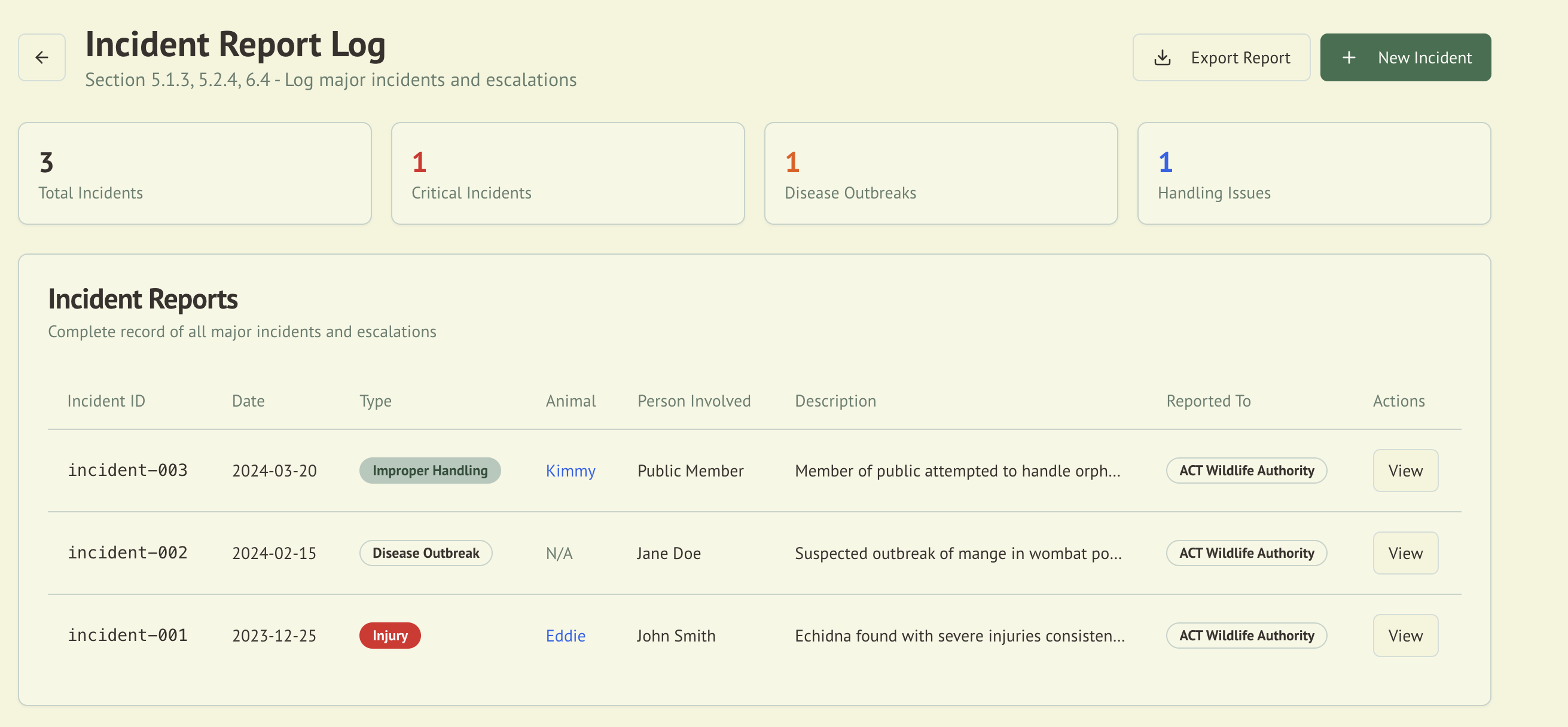
Overview
Effective incident management helps:
- Ensure compliance with mandatory reporting requirements
- Improve safety for animals, staff, and volunteers
- Identify patterns to prevent future incidents
- Document evidence for insurance and legal purposes
- Support learning through analysis and review
Incident Categories
🦘 Animal-Related Incidents
Escapes
- Unplanned departure from enclosure
- During handling or transport
- From release site
- Breach of quarantine
Deaths
- Unexpected mortality
- Euthanasia decisions
- Natural causes
- Treatment complications
Injuries
- New injuries in care
- Worsening conditions
- Self-inflicted harm
- Inter-animal aggression
Disease
- Infectious disease detection
- Outbreak situations
- Zoonotic concerns
- Quarantine breaches
👥 Human-Related Incidents
Staff/Volunteer Injuries
- Animal bites or scratches
- Slip, trip, or fall
- Equipment-related injuries
- Exposure to pathogens
Public Incidents
- Visitor injuries
- Property damage
- Complaints
- Unauthorized access
🏗️ Facility & Equipment
Equipment Failure
- Critical equipment breakdown
- Power outages
- Security breaches
- Communication failures
Environmental
- Natural disasters
- Extreme weather
- Contamination
- Structural damage
Incident Severity Levels
🔴 Critical
Immediate action required
- Human fatality or serious injury
- Multiple animal deaths
- Disease outbreak
- Major facility damage
- Media attention likely
Response Time: Immediate Report to: Management, authorities, insurance
🟠 Major
Urgent attention needed
- Single animal death (suspicious)
- Significant injury
- Escape of dangerous animal
- Equipment failure affecting care
- Regulatory breach
Response Time: Within 1 hour Report to: Supervisor, vet if required
🟡 Moderate
Prompt action recommended
- Minor injuries
- Non-critical escapes
- Equipment damage
- Process failures
- Near-miss events
Response Time: Within 4 hours Report to: Team leader
🟢 Minor
Standard documentation
- Minor incidents
- Observations
- Suggestions
- Maintenance needs
Response Time: Within 24 hours Documentation: Log entry only
Incident Report Fields
Essential Information
| Field | Type | Required | Description |
|---|---|---|---|
| Incident ID | String | Yes | Auto-generated unique identifier |
| Date/Time | DateTime | Yes | When incident occurred |
| Location | String | Yes | Specific location details |
| Reported By | String | Yes | Person filing report |
| Category | Enum | Yes | Type of incident |
| Severity | Enum | Yes | Critical/Major/Moderate/Minor |
Detailed Description
| Field | Type | Required | Description |
|---|---|---|---|
| Description | Text | Yes | Detailed account of incident |
| Persons Involved | Array | No | Staff/volunteers/public present |
| Animals Involved | Array | No | Animal IDs affected |
| Witnesses | Array | No | Contact information |
| Immediate Actions | Text | Yes | Steps taken at scene |
Follow-up Information
| Field | Type | Required | Description |
|---|---|---|---|
| Investigation Required | Boolean | Yes | Further review needed |
| Corrective Actions | Text | No | Preventive measures |
| Reported To | Array | No | Who was informed |
| Documentation | Array | No | Photos, reports attached |
| Resolution | Text | No | How incident was resolved |
| Date Closed | Date | No | When incident closed |
Reporting Workflow
1️⃣ Immediate Response
- Ensure safety of all persons and animals
- Provide first aid if required
- Contain situation to prevent escalation
- Preserve evidence for investigation
- Report to supervisor based on severity
2️⃣ Documentation
- Create report in system immediately
- Record facts objectively and thoroughly
- Attach evidence (photos, documents)
- Identify witnesses and get statements
- Submit report for review
3️⃣ Investigation
- Review incident details and timeline
- Interview involved parties
- Analyze causes (root cause analysis)
- Identify failures in systems/processes
- Document findings comprehensively
4️⃣ Corrective Actions
- Develop solutions to prevent recurrence
- Implement changes to procedures
- Update training if required
- Modify equipment or facilities
- Monitor effectiveness of changes
5️⃣ Follow-up
- Track progress on corrective actions
- Verify completion of all tasks
- Review effectiveness after implementation
- Update policies as needed
- Close incident when resolved
Compliance Requirements
Mandatory Reporting Timelines
| Incident Type | ACT | NSW |
|---|---|---|
| Animal Escape | Immediate | 24 hours |
| Disease Outbreak | Immediate | Immediate |
| Human Injury | 24 hours | 24 hours |
| Suspicious Death | 24 hours | Immediate |
| Equipment Failure | 48 hours | 72 hours |
Regulatory Reporting
Wildlife Authorities
- Species-specific incidents
- Disease outbreaks
- Compliance breaches
- Unusual mortality
Work Safety
- Staff injuries
- Hazardous incidents
- Near misses
- Safety breaches
Public Health
- Zoonotic disease risks
- Environmental hazards
- Contamination events
- Public exposure
Analysis and Reporting
Incident Metrics
Frequency Analysis
- Incidents per month/quarter
- By category breakdown
- By severity distribution
- Trending patterns
- Seasonal variations
Impact Assessment
- Animals affected
- Staff hours lost
- Financial costs
- Reputation impact
- Compliance implications
Standard Reports
Management Reports
- Monthly Summary: All incidents overview
- Trend Analysis: Pattern identification
- Cost Impact: Financial implications
- Compliance Status: Regulatory compliance
- Action Items: Outstanding tasks
Safety Reports
- Injury Statistics: Staff safety metrics
- Near Miss Analysis: Prevention opportunities
- Risk Assessment: Hazard identification
- Training Needs: Identified gaps
- PPE Compliance: Equipment usage
Prevention Strategies
Risk Management
Hazard Identification
- Regular facility inspections
- Equipment safety checks
- Process reviews
- Staff feedback
- Incident trend analysis
Risk Assessment Matrix
| Likelihood | Insignificant | Minor | Moderate | Major | Catastrophic |
|---|---|---|---|---|---|
| Almost Certain | Medium | Medium | High | Extreme | Extreme |
| Likely | Low | Medium | High | High | Extreme |
| Possible | Low | Medium | Medium | High | High |
| Unlikely | Low | Low | Medium | Medium | High |
| Rare | Low | Low | Low | Medium | Medium |
Training Programs
Incident Prevention
- Species-specific handling
- Safety procedures
- Equipment operation
- Emergency response
- Disease prevention
Response Training
- First aid certification
- Incident command
- Documentation skills
- Investigation techniques
- Communication protocols
Emergency Procedures
Emergency Contacts
Maintain current list of:
- Emergency services (000)
- Veterinary emergency
- Wildlife authorities
- Management team
- Insurance company
- Legal counsel
- Media spokesperson
Emergency Response Plans
Animal Escape
- Secure area immediately
- Inform all staff
- Contact authorities if dangerous
- Implement capture protocol
- Document thoroughly
Disease Outbreak
- Isolate affected animals
- Implement quarantine
- Contact veterinarian
- Contact authorities
- Begin treatment protocol
Facility Emergency
- Evacuate if necessary
- Secure animals
- Contact emergency services
- Implement disaster plan
- Document damage
Best Practices
Documentation
- Report immediately: Don't delay documentation
- Be objective: Stick to facts, not opinions
- Be thorough: Include all relevant details
- Use photos: Visual evidence is valuable
- Get statements: Document witness accounts
Investigation
- Start quickly: Evidence and memories fade
- Look for patterns: Identify systemic issues
- No blame culture: Focus on improvement
- Involve staff: Get input from those affected
- Document lessons: Share learning outcomes
Prevention
- Regular training: Keep skills current
- Update procedures: Based on incidents
- Maintain equipment: Prevent failures
- Communicate risks: Keep everyone informed
- Review regularly: Assess effectiveness
Integration with Other Modules
- Wildlife Admission: Link incidents to animals
- Asset Management: Equipment failure tracking
- Compliance: Regulatory reporting
- Daily Operations: Routine safety checks
Remember: Every incident is a learning opportunity. Proper documentation and analysis help prevent future occurrences and improve overall safety and care quality.